
New Release: Our In Vitro Toxicology E-Book
We’re pleased to introduce our new In Vitro Toxicology E-Book, the latest installment in our expert series designed to support confident decision-making in early-stage drug development.
This practical guide provides scientific knowledge and explores strategic approaches to early toxicology screening, provides guidance on selecting the most appropriate assays for your project, and delivers key insights into hepatotoxicity, genotoxicity, and cardiotoxicity testing. It also highlights best practices aimed at reducing late-stage attrition and improving overall development efficiency.
Whether you are optimizing lead compounds or refining your screening cascade, this e-book offers valuable scientific and operational perspectives to strengthen your early safety assessment strategy.
Download your copy here.
DILIscope™ – Have You considered the Hepatotoxicity Risk of Your Compounds?
Drug-induced liver injury (DILI) remains one of the leading causes of clinical failure and acute liver failure, driven by diverse and often complex mechanisms occurring at the molecular level. Early identification of hepatotoxic risk is therefore critical in drug discovery and development.
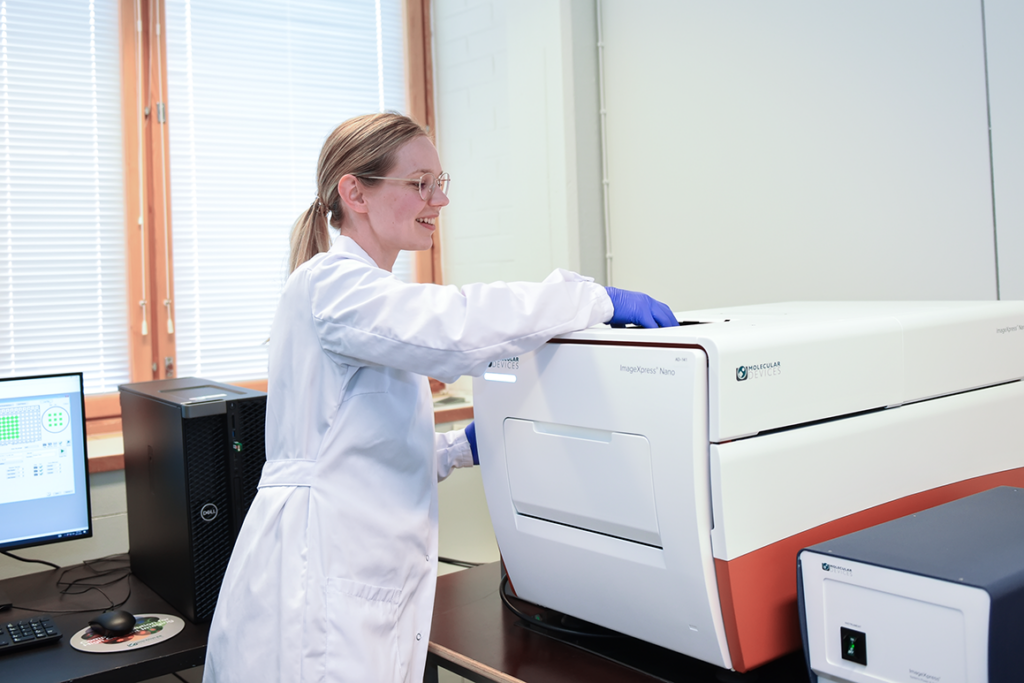
DILIscope™ provides a comprehensive in vitro approach to assess and mitigate potential hepatotoxicity. Using automated high-content imaging, the screening panel evaluates early indicators of safety liability, including cell viability, integrity, nuclear morphology as well as cellular stress (mitochondrial, oxidative stress, steatosis, phospholipidosis, and lysosomal trapping.
The assays are performed in pooled primary human hepatocytes, ensuring full metabolic competence while accounting for inter-individual variability — delivering human-relevant, mechanistic insight.
By integrating these complementary endpoints, DILIscope™ enables confident screening for DILI risk and supports early hazard identification. To further strengthen the assessment, compounds can also be evaluated for reactive metabolite formation and inhibition of key hepatic transporters, both recognized contributors to liver toxicity and DILI.
Identify potential liabilities early — and move forward with greater confidence.
Genotoxicity
For genotoxicity assessment, we provide MiniAMES fluctuation method for efficient screening, with minimal material requirements and utilizing liquid-handling robotics for higher throughput, as well as the five strain AMES test for a more comprehensive evaluation. To further investigate chromosomal damage potential, our in vitro micronucleus test utilizes rapidly dividing ChoK1 cells which is an OECD guideline compliant cell line for this assay. All genotoxicity assays are conducted both with and without metabolic activation (S9 fraction), revealing both direct and indirect (metabolite-mediated) genotoxicity by the drug molecule.
If you would like to discuss how our in vitro toxicology services can support your specific projects, our team is ready to support you at every stage of your development journey.