
A rodent mass balance study is a critical tool for understanding the fate of a drug within the body, enabling comprehensive assessment of in vivo absorption, distribution, metabolism, and excretion (ADME) in a single experiment. Designing such a study—and the associated analytical strategy—requires careful consideration to ensure robust and interpretable data. These studies are typically conducted prior to Phase I clinical trials as part of the Investigational New Drug (IND) submission package, ensuring a comprehensive understanding of the compound’s disposition before human exposure.
In our previous blog, we introduced the concept of mass balance studies. Here, we take a deeper look at key design aspects, focusing on the selection of appropriate animal species and the rationale for choosing a suitable radiolabel.
How does one determine which rodent species and strain to select for a mass balance study? The choice is far from arbitrary—it is guided by both scientific rationale and regulatory expectations. In most cases, the rat is the preferred species for mass balance studies in drug development. Rats have a well-characterized physiology and metabolism, and their size allows for multiple blood samplings. In addition, rats produce sufficient urine and feces for quantitative collection and analysis, and their use in such studies is well established and widely accepted by regulatory authorities. Furthermore, surgical procedures such as bile duct cannulation, can be conducted, when biliary excretion studies are required.
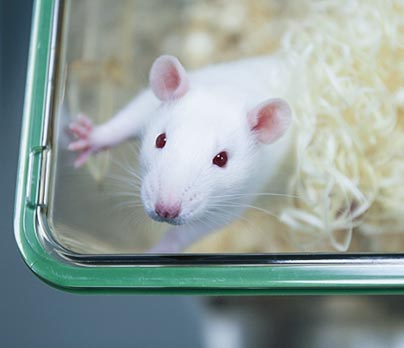
The selection of strain typically aligns with the toxicology program. Sprague Dawley and Wistar rats are the most used strains in general toxicology and pharmacokinetic studies. When these strains are employed in pivotal toxicology studies, they are also preferred for mass balance experiments, ensuring that the metabolic data generated are directly comparable and supportive of the toxicology findings obtained in the same strain. Other strains may be considered when the development program already utilizes them for toxicological or mechanistic reasons.
Both male and female animals may be included in mass balance studies; however, typically single sex—most often male—is selected initially, unless there is evidence or suspicion of sex-related differences in metabolism. It is also advisable to select animals with age and body weight comparable to those used in the preclinical toxicity studies, ensuring consistency across datasets.
Mice are rarely used for mass balance investigations, except when there is a specific scientific rationale, such as employing transgenic or knockout models to explore particular metabolic pathways. Their small size makes complete excreta collection and surgical procedures technically challenging, and in many cases, impractical.
Radiolabeling
Radiolabeling a compound is often necessary to achieve the analytical sensitivity required for mass balance studies and to enable the identification of all the metabolites. In general, the total administered dose should be consistent with pharmacological and toxicological dose levels. Ideally, the same radionuclide should be used across preclinical and subsequent clinical mass balance studies to ensure continuity and comparability of data.
The radiolabel should be incorporated into a metabolically stable region of the molecule—this is critical for all types of radioisotopes. Labeling a site that is readily cleaved (for example, a methyl group) can lead to incomplete recovery data, as the radiolabel may be released as CO₂ or water during metabolism.
When designing a radiolabeled compound, several key factors must be considered. First, the synthetic and radiolabeling route should be carefully planned so that the radioactive moiety is introduced at the latest feasible stage. Second, the radiolabeled compound must exhibit pharmacokinetic properties identical to those of the unlabeled parent compound to ensure data relevance. In most cases, ¹⁴C and ³H (tritium) are the isotopes of choice. Each has distinct advantages and limitations. ¹⁴C offers greater stability and energetic emission and can be incorporated into the core structure, where it typically remains through various metabolic transformations. By contrast, ³H labeling is less stable and susceptible to exchange with hydrogen in aqueous environments but is less expensive and easier to synthesize. For larger molecules, multiple labels may be incorporated to ensure comprehensive tracking. Other isotopes, such as ³⁵S, ³²P, and ¹³¹I, can also be used when appropriate. It is worth noting that some higher-energy isotopes may contribute to compound stabilization through the kinetic isotope effect.
If you need support in designing your next mass balance study, our team would be happy to assist. Otherwise, stay tuned for the next installment in this series, where we will continue exploring best practices in study design.